
Trust and Transparency
The health research supported by the BioResource depends on your participation, the information and samples you provide, and above all your trust in our ability to protect your interests.
Legislative and regulatory standards ensure that the BioResource has the correct approvals, processes, documentation and training in place to safeguard individuals and promote high quality research.
Your contribution
The BioResource invites adults and children (from birth onwards), including those with common or rare diseases and members of the general population, to take part in research studies or to contribute to the research tissue bank.
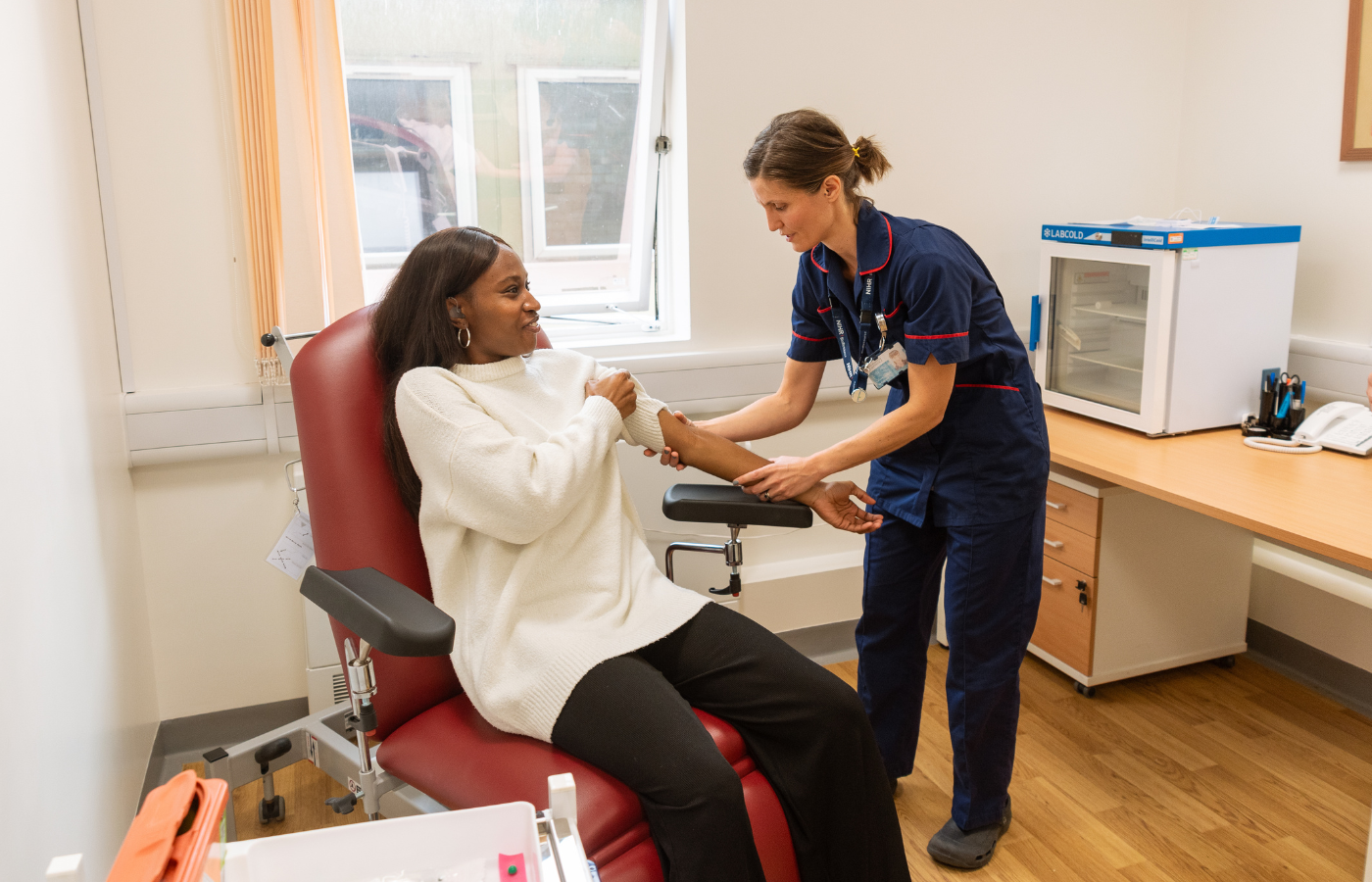
Participants provide health and care information and a biological sample, e.g. blood or saliva.
All the activities that the NIHR BioResource carries out are described in protocols that have been reviewed and given a favourable opinion by an independent Research Ethics Committee (REC). These committees assess research applications, participant materials including information leaflets, consent forms and adverts, and determine whether the research is ethical. They form part of the regulatory framework overseen by the NHS Health Research Authority (HRA).
The HRA expects all organisations handling participant data and samples to treat them with the appropriate care.
It is important to us that our documentation is accessible and of a high standard. We work with local and national patient and public advisory groups to try to achieve this.
The NIHR BioResource has favourable ethical opinion for the NIHR BioResource - Research Tissue Bank (22/EE/0230).
Programmes covered
Dormant cohorts - that no longer recruit new participants- include:
- Covid-19 Clinical Neuroscience Study (COVID-CNS)
- STRategies to Improve Donor ExperienceS (STRIDES)
The BioResource also has a number of nationally approved programmes, which have all had separate REC favourable opinion and Health Research Authority approval:
- Rare Diseases Study (REC REF: 13/EE/0325)
Sponsored by Cambridge University Hospitals NHS Foundation Trust and University of Cambridge
- Genetic Links to Anxiety and Depression (GLAD) Study (REC REF: 18/LO/1218)
- Eating Disorders Genetics Initiative (EDGI UK) Study (REC REF: 19/LO/1254)
Sponsored by King’s College London and South London and Maudsley Trust
- Inflammatory Bowel Disease (IBD) BioResource (REC REF: 15/EE/0286)
Sponsored by Cambridge University Hospitals NHS Foundation Trust
- Immune Mediated Inflammatory Diseases (IMID) BioResource (REC REF: 19/NW/0760)
Sponsored by Manchester University NHS Foundation Trust
- Metabolic dysfunction-associated steatotic liver disease (MASLD) BioResource (REC REF: 19/YH/0331)
Sponsored by King's College London
- Severe Mental Illness Longitudinal Evaluation (SMILE) BioResource (Rec REF: 25/WA/0202)
Sponsored by University of Oxford
Patient Information Sheet and Consent Form
It is essential that our participants or their guardians can provide written consent to take part. We want to accelerate the search for treatments, but this must be with the approval of all who take part.
Age of consent
In line with Gillick principles (see below) we consider 16 years of age to be adult.
In England, Wales and Northern Ireland, there is no specific law that says when a child can agree to take part in research, except for drug studies that test new medicines; a Clinical Trial of an Investigational Medicinal Product (CTIMP). For other kinds of research, we follow common law. This usually assumes that a young person can make their own decisions if they are able to understand the information well enough, this is called “Gillick competent”. It is good practice to involve the family even if the young person appears competent. For children under 16 it is our practice that the wishes of the child are considered although the documentation is signed by a parent/guardian.
Children participants of the BioResource will be asked to consent for themselves once they reach 16 years of age and they will be free to decide if they want to do so or not.
Read the National Health Service Health Research Authority guidance notes.
The BioResource includes many cohorts (projects) so the paperwork our participants see may be tailored to the cohort they are invited through, for example IBD, IBHO, COVID-19, Rare Diseases.
| Adult participant or adult relative | Paperwork for adult (16 years of age or greater): Participant Information Leaflet (PIL)* and Consent Form (CF). If a person has the capacity to consent but is unable to sign for themselves, a witness can sign on their behalf on the Witness Statement of the form. |
|---|---|
| Children | Paperwork: parental or guardian's Patient Information Leaflet (PIL) and Consent Form (CF). Children under 16 must have parental consent: the consent of one parent is sufficient. Foster or other carers (e.g. social workers) use the same Parent/Guardian for Child documents. |
| Adults (more than 16 years of age) lacking capacity | Paperwork: Consultee Information Leaflet (PIL) and Consultee Declaration Form. Sometimes a person may lack capacity to consent due to the illness, infection or treatment and this loss of capacity may be permanent or temporary. A Consultee (relative or friend) can sign the Consultee Declaration option of the form to consent for their relative/friend to join the BioResource. If the participant re-gains capacity they will be asked to consent for themselves to continue being in the study. |
* The PIL may also be called Patient Information Sheet (PIS)

Insurance companies
NIHR BioResource will not share any of your personal (e.g. name, date of birth), clinical (e.g. medication, medical information) and genetic data (e.g. part or all genetic make-up) with insurance companies, in line with the UK government’s Code on Genetic Testing and Insurance.

Related pages
Further information can be found on the following pages: