
Improving access to health research
In line with our Inclusive Research Framework and the Inclusive Research Principles at its core, the BioResource is working to improve access to health research for all current and prospective volunteers.
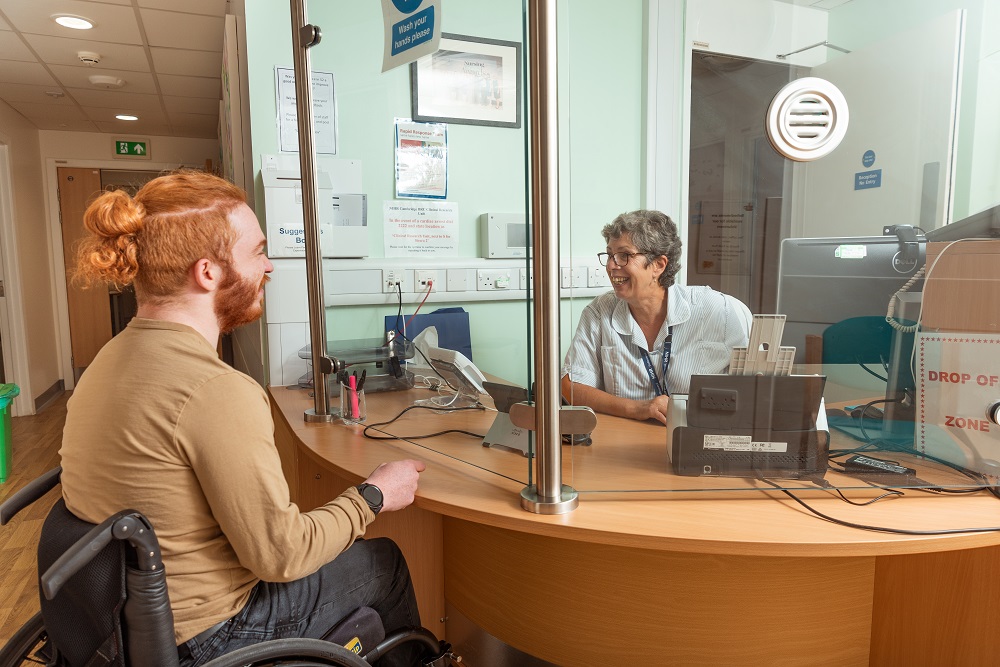
Engaging Disabled volunteers with Purple Goat
Between 2022-2023 the NIHR BioResource worked with inclusive marketing agency Purple Goat and members of the Disabled community to ensure that our documentation, communications and marketing materials are accessible to everyone, including people with disabilities.
Our project consisted of two phases:
The project was delivered in two stages:
1. We held feedback sessions with Disabled consultants to review our existing processes and materials.
2. This was followed by co-creating new content with members of the Disabled community, with the aim of improving inclusivity, accessibility and the onboarding experience for disabled volunteers.
Phase one focused on gathering feedback through sessions facilitated by Purple Goat, involving seven Disabled content creators and disability consultants.
Participants included people with a mix of visible and invisible disabilities, including deafness, neurodiversity, visual impairment and wheelchair use.
They reviewed participant documents such as information packs and data collection forms, as well as promotional materials and volunteer sign-up processes.
They were asked to share honest feedback on how accessible these materials were and to highlight any barriers they encountered when taking part.
Below is a summary of the key points of improvement from the feedback:
Promotional materials and social media
- Visible representation is important to feel seen
- The value of a person’s participation and call-to-action needs to be clearly communicated
- Addressing accessibility considerations when joining the BioResource
- Addressing language disparities
- Accessibility improvements for our website
Future communication and volunteer sign-up
- A multi-channel approach is key as Disabled people use a variety of different platforms
- Visible representation will actively encourage participants to become future volunteers
- Amplifying personal stories on social media from members of the community with lived experiences increase engagement, trust, and authenticity as well as humanises the work of the BioResource
This resulted in resources demonstrating how the BioResource can support any accessibility need a disabled volunteer may have.
The BioResource has been working to implement the above recommendations within our ongoing strategy and working processes. For example, a central point raised throughout the workshop was the need for representative imagery, so the BioResource held a photoshoot featuring five Disabled models.
These photos have since been implemented across our materials, such as our volunteer flyers distributed across all NIHR BioResource Centres and at community and public involvement events.
Phase II focused on co-creating content with members of the disabled community to improve inclusivity, accessibility and the onboarding process for Disabled volunteers resulting in resources demonstrating how the BioResource can support any accessibility need a disabled volunteer may have.
Additionally, the BioResource worked with the Purple Goat team to undertake disability representation and inclusivity training for all staff members to gain a better understanding of the diversity and needs of people with disabilities and create an inclusive environment at BioResource.
We strive continually to ensure that at any point of entry, virtually or in person, the BioResource is welcome and open to disabled volunteers.
Removing language and sensory barriers with Accessible Materials
We want to ensure that the BioResource’s documentation, communications and marketing are accessible to everyone. We therefore strive to provide clear and accessible communications in multiple accessible formats and languages.
We are mindful of using plain English, glossaries for complex terms and inclusive language.
We aim to set clear expectations from the outset as to the frequency and format that our volunteers and public contributors will receive communications.
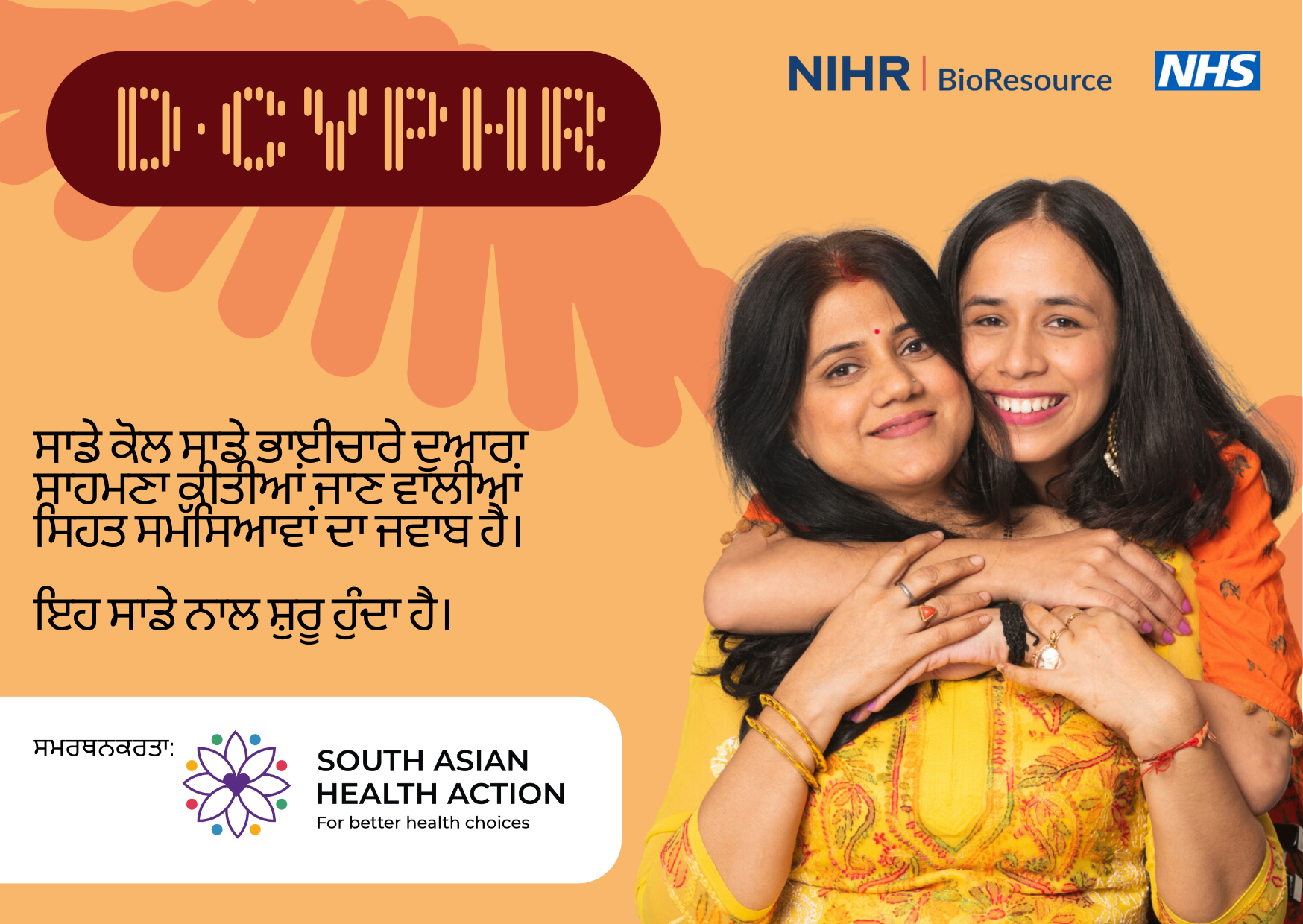
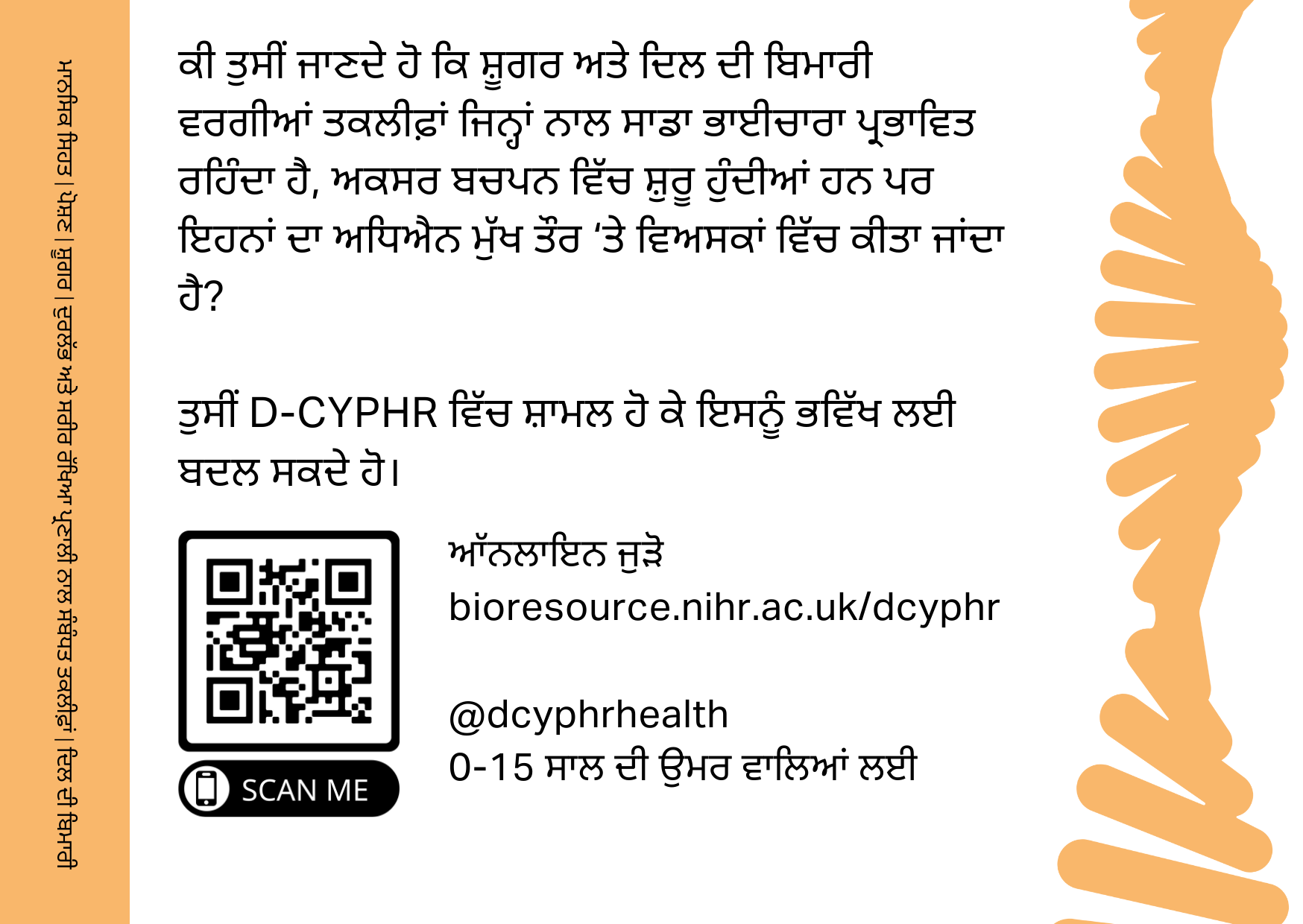
In 2024, we launched an Accessible Materials working group to further remove barriers to joining the BioResource and make the BioResource’s work more accessible and inclusive for underrepresented groups in research:
People for whom English is not first language
Translation of materials into multiple languages such as: Urdu, Punjabi, Arabic, Gujurati, Bengali, French, Polish and Romanian.
Young people and children
Information sheets for D-CYPHR study are tailored to different age groups, such as: an assent (agreement of someone not legally able to give legal consent to participate in an activity or decision) form for children in addition to adult consent form for the D-CYPHR study, and an infographic consent form to enhance understanding.
People with visual and hearing impairments
The BioResource underwent a Web Content Accessibility Guidelines (WCAG) audit and recommendations to make our website more accessible for those with visual and hearing impairments. Some examples include:
- Usinga screen reader to ‘read’ content out loud
- Using a screen magnifier to enlarge part of screen
- Using voice commands to navigate website
- Change browser settings to make content easier to read
- Providing transcripts for audio and video content
- Providing captions for videos
- Ensuring content is structured logically and can be navigated and read by a screen reader
Physical Disabilities
Create a version of a BioResource Information leaflet tailored to people with disabilities, including pre-appointment screening questions to ensure that all appointments are accessible and everyone’s needs can be met.