
First patients begin receiving genomically matched blood transfusions following testing programme developed by NIHR BioResource and partners
- Published: 20 September 2026
- Category: STRIDES, IBHO, Rare disease
The first patients in England are now receiving more precisely matched blood transfusions through a world-leading blood group genotyping programme, helping improve care for people with conditions such as sickle cell disorder, thalassaemia and other rare inherited anaemias.
Rare blood group
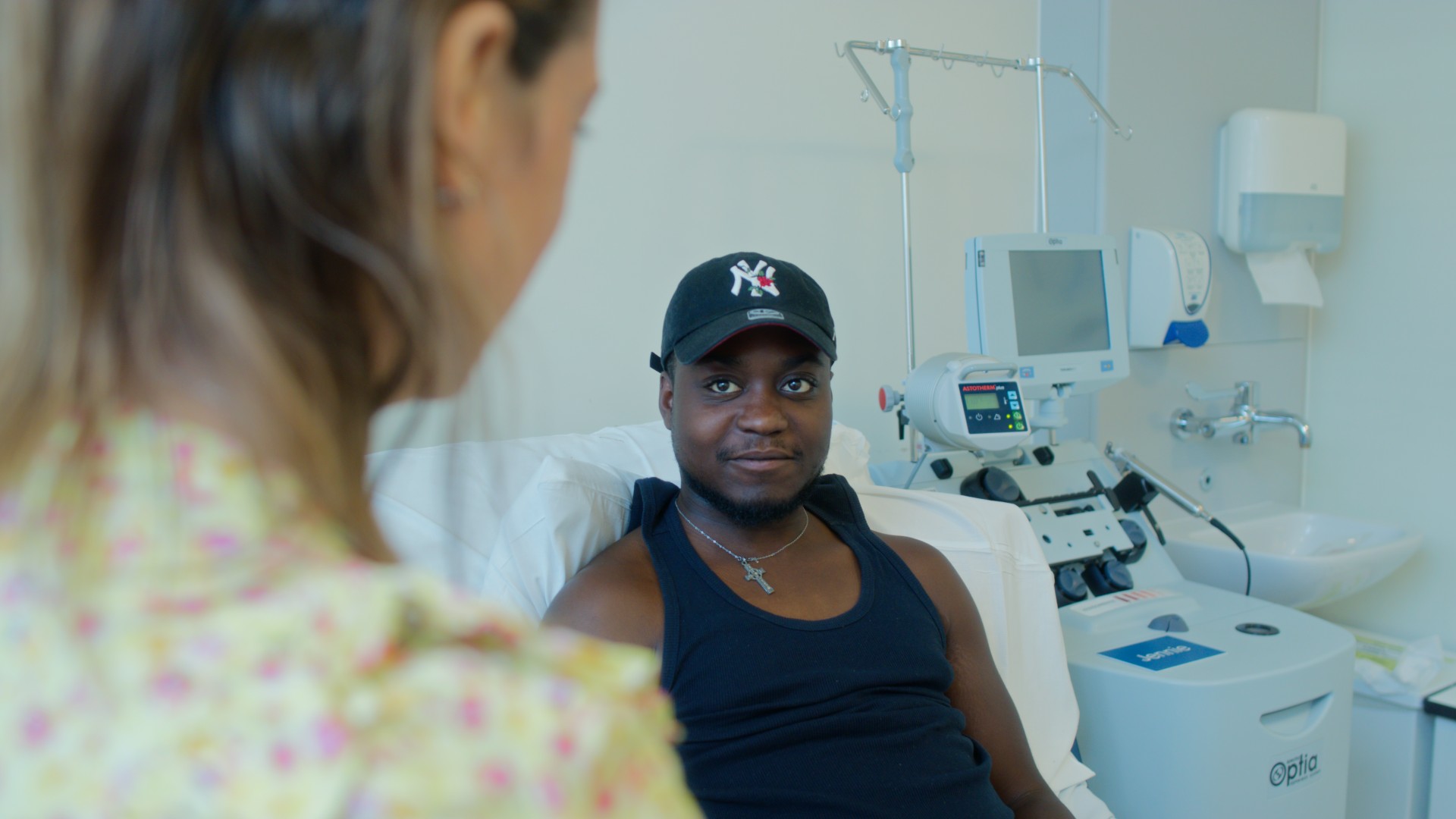
One of the first patients to benefit is 26-year-old Tre Henry-Adegoroye, a patient at University College London Hospitals (UCLH) from Lambeth in London, who has severe sickle cell disorder and depends on regular blood transfusions to stay healthy.
The new test discovered he had a rare variant blood type, which meant his regular transfusions could be even better matched.
- Tre“A sickle cell crisis feels like your body is being torn apart from the inside and crushed. Mine can be triggered by the cold, getting too hot, being dehydrated, or being stressed, or my haemoglobin levels being too high.
“The new test found I had variant RhD type. The doctors explained to me that the new test uses genotyping to get more precisely matched blood.
"It's good to know the NHS is working towards improving care for all people who need to have blood. I'm also very grateful to the people who donate blood.”
A key part of this achievement has been the contribution of volunteers participating in the NIHR BioResource. Through a collaboration between the University of Cambridge, the NIHR BioResource and NHS Blood and Transplant (NHSBT), more than 80,000 blood donors have been enrolled into the STRIDES NIHR BioResource and undergone array genotyping. This resource has helped researchers better understand blood group variation and support the development of genomic approaches to transfusion medicine.
The programme uses DNA-based blood group testing to identify a much wider range of blood group variations than traditional methods, helping clinicians select better matched blood and reducing the risk of patients developing antibodies that can make future transfusions more difficult.
People with conditions such as sickle cell disorder, thalassaemia and rare inherited anaemias often require regular blood transfusions throughout their lives. While blood is routinely matched for major blood groups, differences in many other blood group markers can cause some patients to develop antibodies over time, making it harder to find compatible blood. DNA-based genotyping enables a much wider range of blood group variants to be identified, helping clinicians provide more closely matched blood and reducing the likelihood of transfusion complications.
- Professor Dame Sue Hill, Chief Scientific Officer for England and Senior Responsible Officer for Genomics at NHS England"This programme shows how the NHS is using genomics to deliver more precise, personalised care.
"For people with conditions such as sickle cell disease and thalassaemia this potentially means safer care, fewer complications and greater confidence that the blood they receive is as closely matched as possible."
The blood group genotyping programme is being offered to around 18,000 patients across England who receive regular transfusions. This milestone demonstrates how BioResource participants are helping to drive advances in genomic medicine, enabling research discoveries to be translated into real-world improvements in NHS care and more personalised treatment for thousands of patients.
This testing programme forms part of a translational research and implementation collaboration between NHS Blood and Transplant, the NIHR Biomedical Research Centres at Cambridge University Hospitals and at University College London Hospitals, the University of Cambridge, the NIHR Blood and Transplant Research Unit in Donor Health and Behaviour, and the NIHR BioResource, supported by the National Institute for Health and Care Research (NIHR), NHS England and NHSBT. Together, these organisations are working to translate advances in genomic science, data analytics, and clinical practice into more personalised transfusion strategies and improved patient outcomes across the NHS.
- Dr Nicholas Gleadall, Assistant Professor in Clinical Genomics of Transfusion and Transplant at the University of Cambridge and Chief Analyst of the Blood transfusion Genomics Consortium"It's brilliant to see a decade of work reach its first patients. 10 years ago, blood services from around the world came together through the Blood Transfusion Genomics Consortium to ask whether a DNA based test could determine a person's blood groups to clinical standards and thousands of blood donors gave the samples that answered that question.
"Building on their contribution, this genuine partnership set up the blood group genotyping programme now running across the NHS."