
Taking part in BioResource research led to potentially life-saving cancer diagnosis
- Published: 28 August 2026
- Category: IBD, General BioResource
When Victoria agreed to join the NIHR BioResource, she hoped to help researchers learn more about Inflammatory Bowel Disease (IBD) and improve care for future patients. She never expected that taking part would lead to information that could help detect her cancer at an early stage.
Joining the IBD BioResource
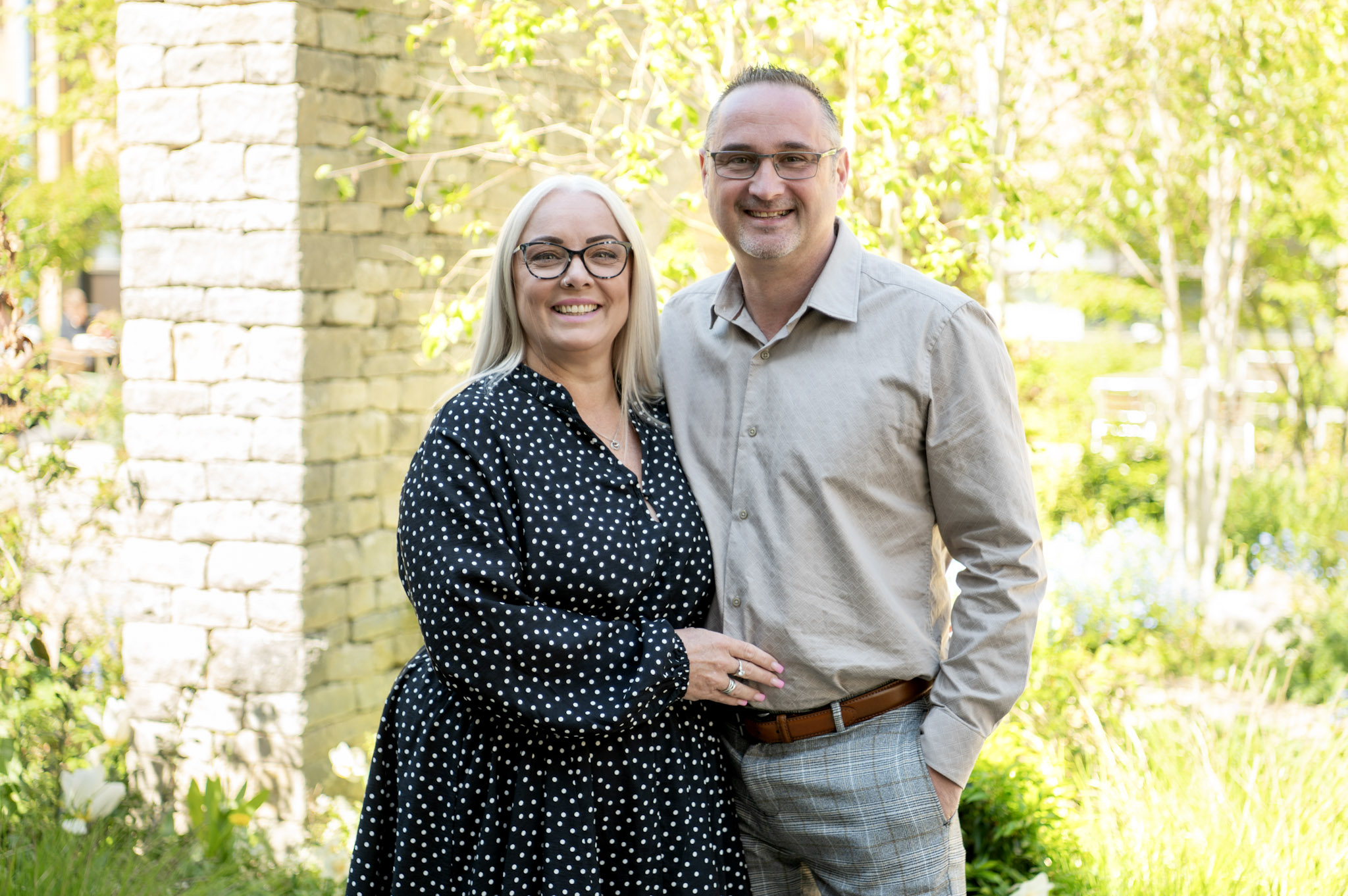
After being diagnosed with ulcerative colitis, Victoria (left), 51, joined the IBD BioResource, a programme run by the NIHR BioResource that supports research into the causes of IBD and the development of better treatments.
More than 50,000 people across the UK have provided samples and information to support research into Crohn's disease and ulcerative colitis (the main forms of IBD).
When research revealed an inherited cancer risk
As part of this work, researchers have also explored how potentially important genetic findings discovered through research can be safely and responsibly returned to participants where there may be implications for their health.
Victoria was among the first participants involved in the BioResource-led pilot project that allows certain clinically significant genetic findings to be fed back to IBD BioResource participants who have agreed to receive this information. Through this process, researchers identified that Victoria has Lynch syndrome, an inherited condition that increases the risk of several cancers, particularly bowel and womb cancer.
The result was confirmed through NHS East Genomics and enabled Victoria to seek specialist advice from NHS Clinical Genetic Services, which led to the decision to have surgery to help reduce her cancer risk. During preparation for her surgery, doctors at Addenbrooke’s Hospital in Cambridge discovered an early-stage womb cancer that had not previously been identified. Thanks in large part to its early detection, the cancer was successfully treated.
Following her surgery, Victoria is now cancer-free and married her partner, Mark, earlier this summer.
- Victoria“I joined the IBD BioResource because I wanted to make things better for other people with IBD, and because one of my children benefitted from life-saving research when they were young. It’s one of the best decisions I ever made.
"Without the study, it could have been years before I found out about the cancer.”
Her diagnosis has also provided valuable information for her family. Lynch syndrome is an inherited condition, meaning close relatives, including her children, could now be tested for the condition.
Setting up the genetic feedback process required close collaboration between the IBD BioResource research team, NHS Clinical Genetics services, patient representatives and clinicians across the UK. The pilot is currently available only to a limited number of BioResource volunteers, but the team hopes similar approaches could benefit more participants in the future.
- Professor Miles Parkes, IBD BioResource Lead“I was delighted to hear of such a positive outcome from the ‘results feedback’ mechanism that we set up. We were clear from the early days that we wanted the IBD BioResource to be a platform which patients could engage with and get something back from.
"Setting up the mechanism that allows relevant research results to be passed back to participants and their medical teams was far from simple, but all the hard work undertaken by many members of the NIHR BioResource team was amply rewarded when we heard Victoria’s story among the first cases to whom we had provided the feedback.
"We are delighted for her - and grateful to the many other patients who participate in our studies.”
Victoria’s genetic finding was identified by the NIHR BioResource research team through analysis carried out at the Wellcome Sanger Institute and subsequently confirmed by NHS East Genomics.
Her story demonstrates both the value of research participation and the potential of carefully managed genetic feedback to create benefits for participants and their families.