
Brothers take part in diabetes research to help each other and future families
- Published: 09 June 2026
- Category: D-CYPHR, General BioResource
NIHR colleagues in the North West Regional Research Delivery Network (RRDN) spoke to two brothers about their motivation to join D-CYPHR and other research studies. We're delighted to share their story below.
Brothers, Felix Alldred, 16, and Eric Alldred, 14 from Warrington, have shown sibling solidarity by taking part in research to help improve the lives of people with type 1 diabetes - the condition Felix has lived with since age 7.
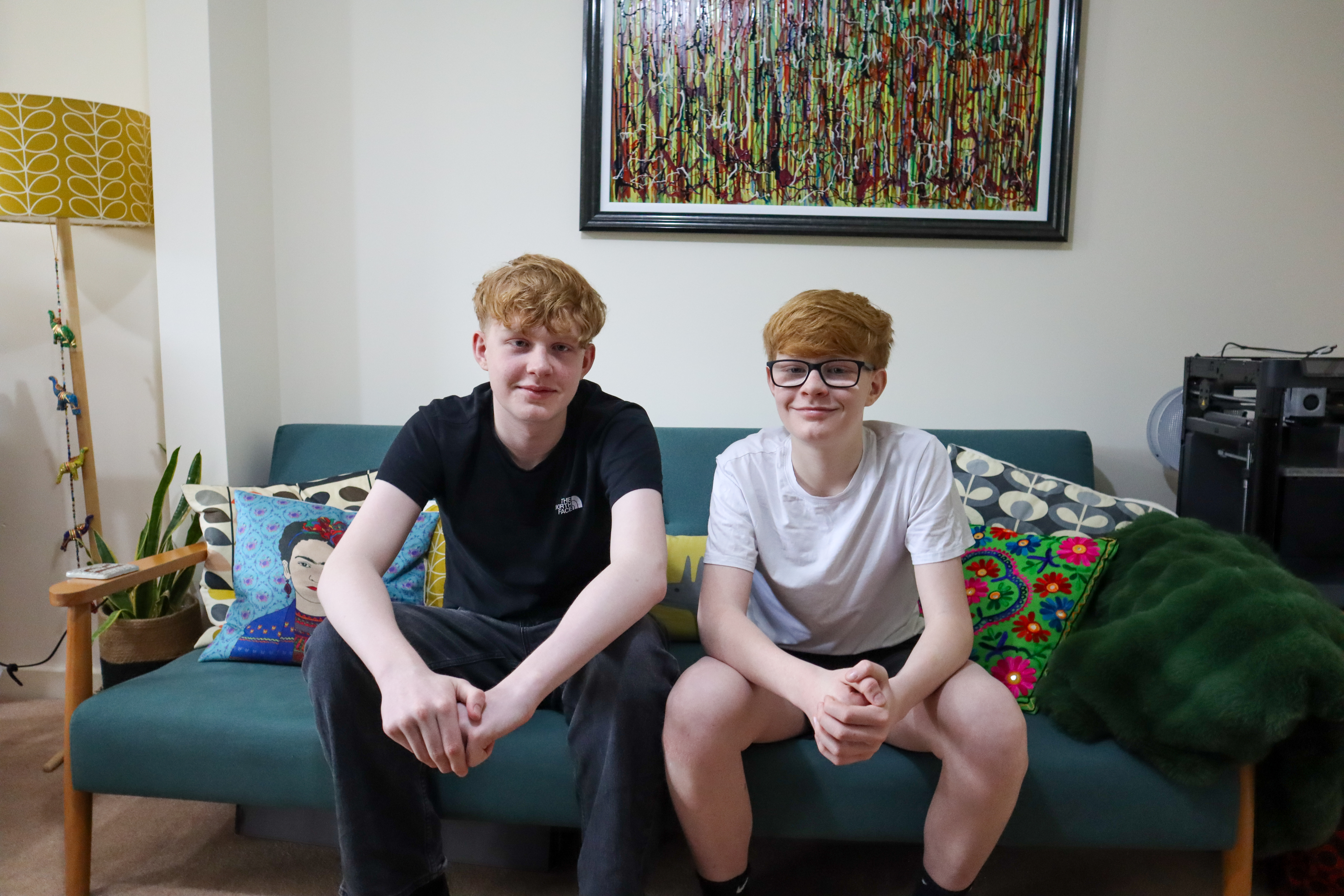
L-R Felix and Eric (Image: Suzanne York)
When Felix was diagnosed with type 1 diabetes, it happened quickly. Felix’s Mum, Rachel Hall, first noticed that he was very tired. Then came other symptoms, including drinking more water, going to the toilet more often and a distinctive ‘pear drop smell’ on his breath. A finger-prick test at A&E in Warrington Hospital confirmed he had type 1 diabetes. For Felix and his family, life changed straight away.
- Felix Alldred“I was a bit unsure about what it actually meant. It was a big change. I had to think about sugar, injections before every meal and what I was eating.”
Being offered research early
Within 24 hours of his diagnosis, the specialist children’s diabetes team at Warrington Hospital spoke to the family about research. Felix was invited to take part in the ADDRESS-2 study, and Eric was also invited because siblings can play an important role in helping researchers understand more about type 1 diabetes.
People with a sibling who has type 1 diabetes have a slightly increased risk of developing the condition themselves. Although type 1 diabetes is often diagnosed in childhood, it can develop at any age. The ADDRESS-2 study aims to better understand why this happens, and how risk might be reduced in future, is therefore important.
Eric and his family are aware of this increased risk he carries and both boys were happy to be part of the research. The study involved simple measures such as taking height and weight, alongside samples stored in a biobank for future research.
For Felix, who enjoys swimming competitively for a club, taking part felt straightforward.
“It wasn’t difficult, and it didn’t hurt,” he said. “If it’s helpful and it’s not very difficult to do, why not take part?”
Mum Rachel said: “It was a simple process. Samples are stored in a biobank so they can be used for future research into why children develop type 1 diabetes.”
Helping his brother and others
For Eric, who enjoys gaming, cycling and science at school, taking part was about more than just the study.
“It’s important,” said Eric. “You never know, you could get it, or it could help someone, like Felix, who has it. I wanted to take part to help my brother, and it was nice that we could do something together. It’s also a good opportunity to do something that could help other people too.”
Rachel is proud of both boys for taking part in research together, highlighting the important role families can play in supporting research.
She added: “Including siblings is really important, because it helps researchers understand why some children develop type 1 diabetes and what that might mean for brothers and sisters.”
Research making a difference now
Felix has already seen how research can improve life with type 1 diabetes. When he was first diagnosed, he relied on finger-prick testing. He now uses glucose monitoring technology that sends readings to his phone and helps him manage the 5 insulin doses he must take every day.
“Research over the last couple of years has made my life easier,” he said.
The technology allows Felix to check his glucose levels quickly and discreetly, whether he is in class at college or training in the pool.
“It doesn’t stop me from doing anything,” he said.
For his family, this has supported Felix’s independence and allowed him to continue doing the things he enjoys.
Following a positive experience of taking part in research, both Felix and Eric have continued their involvement by joining D-CYPHR (DNA, Children + Young People’s Health Resource), a national health research programme made for families with children aged 0-15. Taking part was straightforward and can be completed from home. After registering and providing consent online, each child or young person provides a saliva sample using a kit sent in the mail and completes a short questionnaire.
More than 13,000 children have already joined D-CYPHR, which is run by the NIHR BioResource. It combines DNA with health and lifestyle information to help researchers build a clearer picture of how genetics and environment influence health, including conditions such as type 1 diabetes.
Why taking part matters
- Dr Chris Smith, Strategic Development Director, North West Regional Research Delivery Network"It’s stories like Felix’s that have driven the NIHR’s mission since we were established 20 years ago, and they remain the reason we continue to fund and deliver research that changes lives today."
For Felix and Eric, research is not just about future discoveries. It is something that has already improved daily life, and something they can contribute to together.
Felix would encourage others to take part if they are given the opportunity.
“You should just do it,” he said. “You might end up helping develop something to make your life easier.”
The National Institute for Health and Care Research (NIHR) is celebrating 20 years driving life-changing research that matters. From faster diagnoses to better treatments and improved quality of care, NIHR research changes lives across the UK.
Families with children aged 0-15 with and without health conditions can sign up to D-CYPHR.